LG Dehumidifiers Recalled after Reports of Thirteen Fires

Thirteen fires and more than one million dollars in property damage have been caused by LG Dehumidifiers, prompting a recall. The Goldstar GHD30Y7, Goldstar DH305Y7 and Comfort-Aire BHD-301-C dehumidifiers are all included in the recall. The recalled units are distributed through The Home Depot, Walmart, Ace Hardware, Do It Best, Orgill and other nationwide retailers from January 2007 through June 2008.

The failure mode is identified by the CPSC as a short in the power connector for the dehumidifier's compressor. Consumers are warned to immediately stop using the dehumidifiers and unplug them. Goldstar and Comfort-Aire deny any responsibility.

If you learn of dehumidifiers in the area of origin, it's recommended to hire an electrical engineer to perform a site inspection so as to rule the unit in or out, along with any other electrical sources, including the structural electrical system. The dehumidifier should be preserved if there is any possibility it may have been involved in the fire, along with the receptacle to which it is connected, and any associated cords, including extension cords.
 

Pourable Gel Fuel Recalled

On September 1, 2011 the Consumer Product Safety Commission announced a voluntary recall of all pourable gel fuels made by nine separate companies. The recall covers an estimated two million units of this fuel, which has been sold since 2008. Customers are being asked to contact the individual companies to obtain a refund for return of the product.

The recall is reportedly based on 65 reported incidents of flash fires. The fuel is designed to be used in outdoor fireplaces or firepits.  Specifically, the pourable gel fuel can ignite unexpectedly and splatter onto people and objects when it is poured into a firepot that is still burning.

If you have a claim involving a flash fire occurring when an individual was using pourable gel fuel, your first instinct may be to chalk it up to user error. However, based on this recall, thought should be given to pursuing a products liability theory.
 

Recall Notices and Your Subrogation Case

Property insurers are all too familiar with losses caused by defective products. Some product defects are isolated instances, affecting only one unit, but in today’s era of mass production and of use of component parts supplied by third-party vendors, defects that affect every unit of a particular product are commonplace.
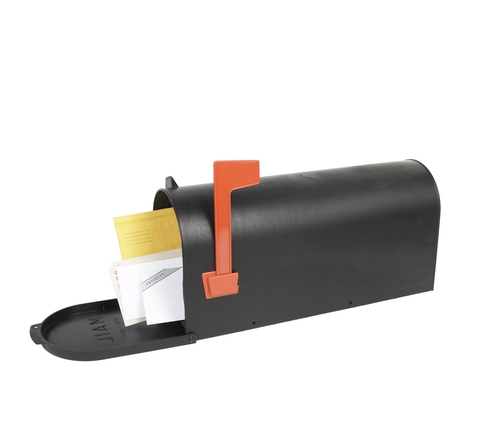
When a systemic defect is discovered, such as the defect affecting Ford cruise control systems or Norcold RV refrigerators, a prudent manufacturer will proactively issue a notice of product recall to consumers. Some such notices are published through the manufacturer’s website or through government channels, and are not directly sent to consumers. Others, such as the recalls issued by Ford and Norcold, are sent by mail directly to affected consumers. In many cases, the consumer ignores the recall notice, which can present problems for a subrogated property carrier attempting to recover against the manufacturer of the defective product.

In litigation, the problem arises when the product manufacturer can prove that it sent one or more recall notices to the insured. Manufacturers rely on the notices as evidence of the insured’s contributory negligence. However, the confirmed receipt of a recall notice by the insured does not automatically devalue your subrogation case. Further analysis should be done as there are several factors which can work in favor of a subrogated insurer. First, the insured may deny receiving the recall notice. Recall notices are almost always sent by standard US Mail, with no means of confirming the consumer’s receipt of the notice. In those instances, the assertion by the insured that he or she never received any notice of recall is often sufficient to drive up the value of the case. Because many recall documents are sent in plain envelopes which give no clue that they contain vital safety information, it is reasonable to assume it could be discarded as “junk mail”.

Even if there is no real dispute that a recall notice was received, the manufacturer must show that the recall was effective in curing the defect which it seeks to address. For example, some Ford owners have suffered fire losses relating to the cruise control systems of their vehicles after they had the recall work performed. Likewise, Norcold has issued repeated recalls of some of its RV refrigerators, and maintains a website advising certain consumers that “[e]ven if your refrigerator was repaired as part of a previous recall, it is necessary to have it repaired again to minimize the risk of injury or death due to fire.” If the recall work is not actually effective in correcting the product defect, it is arguable that the recall notices have no real effect. That is, if the product defect still exists after the recall work is performed, a consumer who ignores the notice has not failed to decrease his or her risk of a loss.
 

Recall notices can also be used as an offensive tool in subrogation actions. Many courts have admitted recall notices into evidence to show that a particular defect existed at the time the product left the manufacturer’s control. The plaintiff must show substantial, independent evidence of the defect’s occurrence in the actual product involved in their case. Further, if the recall issued prior to the date of the loss, the product manufacturer will be hard pressed to keep it out of evidence as a subsequent remedial measure. A recall notice coming into evidence is obviously devastating for the product manufacturer.

In short, subrogated insurers should not despair when they learn that their insured received one or many recall notices relating to a product which caused a loss, as significant value may still be recovered.

 

Not Quite a Recall--Lennox Issues a "Product Hold" Due to Fire Hazard

On September 17, 2010 Lennox International, Inc. sent a letter to all of its constituent regional organizations as well as its licensed dealers, installers and repair technicians placing a “Product Hold” on a series of residential air conditioning units. According to the letter, Lennox air conditioning units manufactured between July 1, 2010 and September 16, 2010 starting with serial numbers 1910G, 1910J, 5810G, and 5810J represent a serious fire hazard during installation. As part of the standard installation, the suction lines on the units must be brazed. Due to the configuration of the suction lines, one of the refrigerant valves can overheat and crack from the heat generated by the brazing. As a result, refrigerant escapes and the oil in the refrigerant can ignite. There are several reported cases of the fire spreading to the home causing significant property damage. It is believed that Lennox has not issued a full recall of these units because it is trying to develop a fix for the problem so that units that have been released into the supply chain can still be utilized at a later date. 

Clearly any fire involving an HVAC unit reported between July 1 and September 16 should be scrutinized to determine if a Lennox unit was involved and, if so, whether a “held” unit was the culprit. If it is determined that a “held” unit was the culprit, Lennox should be considered as a potential defendant. Second, there is at least one known case of this type of fire occurring after the “hold” was issued. Any installer that fails to heed Lennox’s warning not to install the product could open itself to liability, depending on the laws of the state where the fire occurs.

Car Fire Cases: Recalling the Recall

Defective car cases can be challenging to pursue.   When the car is subject to a recall, recovery potential usually improves.  If the vehicle’s owner knew about the recall and had the repairs done, do not despair—many times those repairs are inadequate.

One example is the defective Ford speed control deactivation switches.   The switches have been the subject of recalls since 1999 and continuing through to 2009.   However, on February 2, 2008, Ford issued a "recall of the recall" as to 225,000 of its previously recalled cars that had supposedly been "fixed."   The problem, as portrayed by Ford, was that a certain batch of fused wiring jumper harnesses installed in vehicles had "defective fusing."   Sources would later say that the problem was also an ambiguity in the service instructions, causing technicians to make mistakes in executing the fix.

Another example is the recall campaign for the 2001-2004 Mazda Tributes, which described the problem with the ABS modules as follows:

What is the problem?
…. [T]he Anti-lock Brake System (ABS) Module connector may have missing or dislodged wire seals.  This condition could allow contamination to enter the module connector creating a potential for an electrical short.  …. This condition could occur either when the vehicle ignition switch is in the off position or while the vehicle is being operated.

This recall fails to explain the root cause of the defect and how that problem is addressed by the “fix”.  Rather, significant discretion is given to the service technician to decide whether to repair or replace the harness connector (“as appropriate”) and the connector to the ABS module, which gives much opportunity for human error.

In sum, the fact that recall work was done does not necessarily destroy your subrogation case.  In fact, it may open up more questions about the effectiveness of the recall and provide an additional theory of liability in certain circumstances.

PTAC Fires Becoming Subrogation Opportunities

PTAC fires are causing a recent stir in apartment complexes and hotels. What is a PTAC, you ask? PTAC's are Packaged Terminal Air Conditioners/Heat Pumps. They are self contained machines installed through the wall with a sub unit for each room, which can be controlled independently. The units normally have the ability to heat as well as cool.

In December 2009, the U.S. Consumer Product Safety Commission recalled about 30,000 Amana-brand, Comfort-Aire, and Century-brand PTAC units manufactured by Goodman Manufacturing. The recall covers units manufactured from February 2007 to April 2008.

According to the recall, the problem with the units appears to be overheating where the power cord connects to the power supply, causing a burn or fire hazard.  However, due to the relative newness of these fires, the specific problem is still unclear and a case-by-case evaluation should be employed. The power cords are manufactured by Tower Manufacturing, a U.S. Corporation. The circuit boards are manufactured by Everex Communications, also U.S. based. 

Goodman has also implemented a voluntary corrective action program (“CAP”) in which they provide new replacement power cords for the recalled units. However, it has been reported that these replacement cords have also been subject to failures/fires. With 30,000 units subject to the recall, and the potential of the corrective action program being unsuccessful, there will likely be more subrogation opportunities with fires involving PTACs.  

Product Recalls: Bolstering Your Subrogation Case

Junk appliancesOne of the first things to do upon receipt of a new subrogation loss involving a product is to check to see if there are any recalls of that product.  Ultimately, if your cause and origin investigator determines the product is the cause of the loss, the recall can greatly strengthen your subrogation case.  It provides effective cross-examination of the manufacturer’s employees and experts, as well as substantial leverage in settlement discussions. 

The United States Consumer Product Safety Commission (“CPSC”) regularly advises the public of product recalls and is an excellent resource.  Recently, the CPSC issued the following product recalls which may be relevant to future subrogation claims:

On July 30, 2008, Frigidaire announced a voluntary recall of clothes washers due to a fire hazard.  An internal defect in the washers’ drain pump case overheats and presents a fire hazard.  This recall involves several models within the six brands manufactured by Frigidaire which were sold nationwide between February 2009 and May 2009.  The Frigidaire brands subject to this recall include Crosley, Frigidaire, Kelvinator, Kenmore, Wascomat and White-Westinghouse

On July 21, 2009, Fiesta Gas Grills announced a voluntary recall of its Blue Ember grills, which are fueled by propane.  These gas grills are manufactured by Unisplendor Corporation and Keesung Corporation, both in China. Fiesta is the national importer.  The hose of the gas tank can get too close to the firebox, exposing it to heat and creating a fire hazard. The grills were sold nationwide between November 2006 and June 2007 and in Canada between November 2006 and May 2009. 

On August 11, 2009, Griffin International issued a voluntary recall on Wii battery recharge stations.  Psyclone Essentials and React Wii 4-dock battery recharge stations are recalled due to a fire hazard. The battery pack can overheat, creating a fire hazard. The battery packs subject to this recall were sold at Target, Toys R Us and on amazon.com from January 2008 to July 2009.